The Psychology of Social Media
- christinalcpc
- Jul 6, 2025
- 4 min read
By Nicole Houck
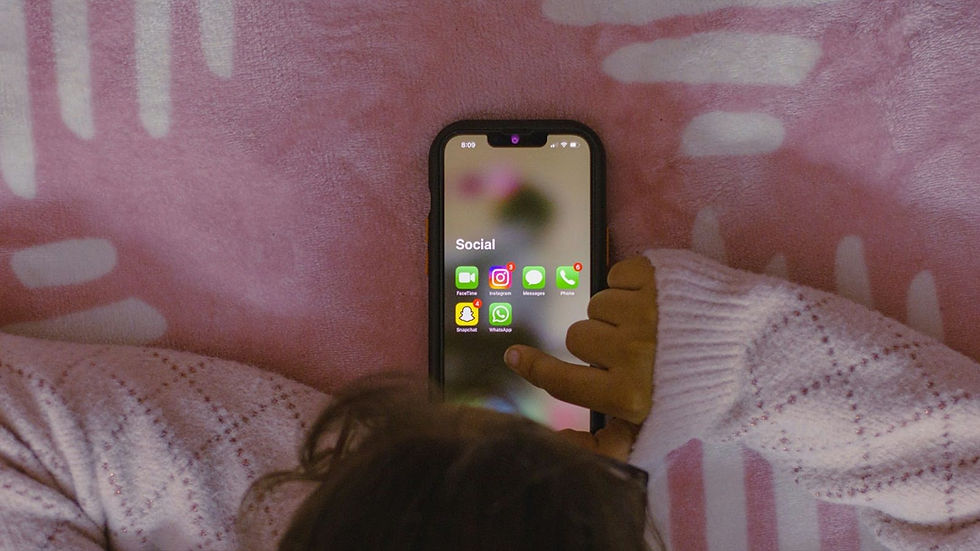
Social media is an online space in which people can virtually interact with each other, share content, and communicate. Psychologically, it's important to investigate how social media use impacts us! According to a 2018 study, 81% of teenagers were using social media regularly. For something so common, and its introduction starting at younger and younger ages, it will take some time to truly understand the effects of this complicated world on our minds. It is important to pay attention to what we do know and consider your own social media usage.
Potential Benefits
Various studies have shown that being on these sites is not always a bad thing! Different people use social media in different ways, and it's important not to let the harms overshadow the potential benefits.
Psychology Today mentions, in this article, that many might find joy and a sense of fulfillment through social media. It can bridge physical boundaries and help people find a community where they belong and are understood. This means that, regardless of the miles between us, we are able to find and connect with similar people. For example, if a friend moves away, social media makes it that much easier to stay connected with them.
According to the American Psychological Association, many report that they feel social media allows them to express themselves creatively. As nearly anyone with internet access can create a social media platform of some kind, doors are open for people to be able to gain creative inspiration and share their talents with others.
Social media also brings news to our fingertips. Some argue that social media has allowed for a stronger sense of democracy, as anyone with an account can report on various happenings and use their voice to speak out. However, it's important to mention that while social media increases news access, it also increases access to misinformation.
Potential Harms
Psychology Today reminds readers about the potential harms of misinformation. While many might think they can spot fake news when they see it, the truth is that we are not as skilled at this as many hope to be. The psychological idea of ‘confirmation bias’ might help explain our difficulty discerning real news from fake news. Confirmation bias is the subconscious tendency that we as humans have to seek out information that aligns with our beliefs, while ignoring other information, regardless of truth.
Most of the concerns about social media focus on its potential impacts on mental health and well-being. While the causal relationship between social media use and poor mental health has to be further explored, as explained by Psychology Today, we should not ignore the findings we have now. In general, social media usage has been associated with lower well-being, feelings of isolation, and higher rates of depression.
Other than these direct connections, many of the potential harms from social media happen indirectly. For example, in this article by UC Davis Health, the use of and exposure to filters and editing on social media can cause a distorted self-image. Access to altered images can damage one’s body image as they compare their unaltered physical bodies to pictures seen online. This dissatisfaction from comparison doesn’t stop at body image. UC Davis Health also found that using social media might increase FOMO, the ‘fear of missing out’, as users compare their lives to the highlight reels others post.
Another indirect effect of social media on mental health is a negative impact on sleep, especially for teenagers. Without proper sleep, well-being is likely to decrease. Social media also provides a platform for cyberbullying. According to a 2020 study, as mentioned by UC Davis Health, 40% of all internet users reported experiencing some form of cyberbullying. Users, especially younger people, may also be exposed to harmful content, such as violent, sexual, or hateful material.
While there has not yet been a scientific consensus, there is a strong concern that social media could be addictive. UC Davis Health mentions that a simple ‘like’ on a social media post sends dopamine to the reward centers of our brain. We may start to crave this specific hit of dopamine, seeking more approval from followers. However, inversely, when we don’t receive likes, our sense of self adequacy and esteem can be harmed.
Healthy Social Media Use
If all of this has left you feeling concerned about social media, don’t worry! You are not alone in these concerns, and we’re here to help you use social media in a healthy and safe way. For those who think that their social media use may be damaging, research, which you can read more about here, has shown that taking a social media break can improve well-being. Even taking only a week off has been shown to have positive impacts!
Still worried? Here are some more tips for fostering a healthy and safe social media experience:
Reflect on your relationship with social media
Set time limits on your apps (you can often do this in your phone’s settings)
Unfollow accounts that make you feel bad about yourself
Make in-person plans with friends and family
Track your screen time to see which apps you are spending the most time on
Try out new hobbies outside of social media
Check if your apps allow you to hide the ‘like’ count on your posts


Comments